Translating a Shopify store involves much more than replacing product copy. Customers move through navigation, filters, product pages, checkout messages, transactional emails and legal information. A gap in any of these areas can interrupt the buying journey or weaken trust.
Use this checklist to plan the work with your team or our ecommerce translation and localisation service: inventory the content, assign owners and test the complete buying journey in each language.
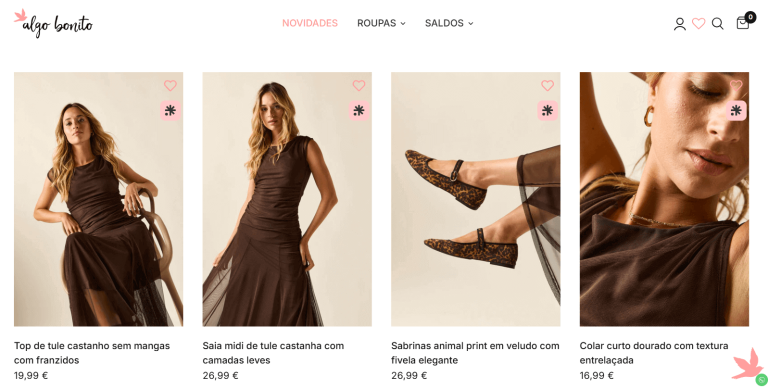
In our Algo Bonito Shopify case study, market research, a European Portuguese glossary and a style guide preceded the recurring product-content workflow. Agree the content owner and review route, then test the store journey before scaling the catalogue.
Define markets before adding languages
Choose markets using demand, delivery coverage, returns capability, pricing and customer-support capacity. A language is not a market: English content for the United Kingdom may require different sizing, tax information and terminology from English content for the United States.
For each market, document the locale, currency, units, tax display, shipping promise, returns conditions and preferred tone. These decisions shape the translation brief.
Audit every translatable content type
Create an inventory before sending text for translation. Shopify content may live in the theme, product fields, navigation, apps and notification templates.
- Product titles, descriptions, options, variants and metafields.
- Collections, filters, menus, buttons and search labels.
- Homepage, landing pages, blog posts and FAQs.
- SEO titles, meta descriptions, image alt text and URL handles.
- Cart, checkout and account messages.
- Order, shipping, cancellation and refund emails.
- Policies, delivery information and returns instructions.
- Text injected by reviews, subscriptions, loyalty or search apps.
Mark the owner and source for each field. This prevents content from being translated twice or omitted because teams assume another system controls it.
Choose the right translation workflow
Native Shopify language management
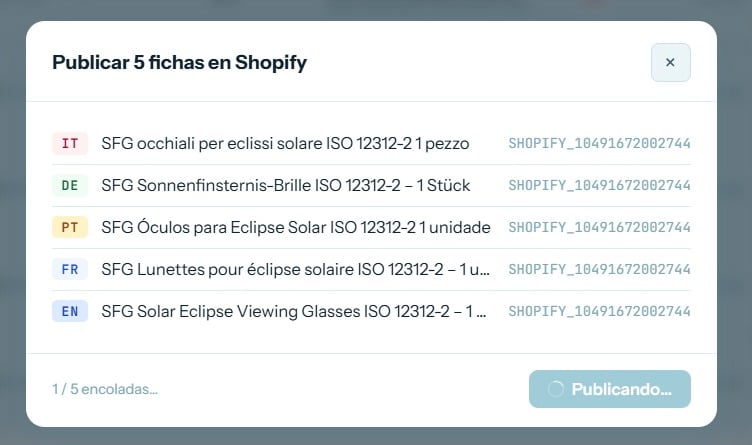
Shopify’s language features and Translate & Adapt can manage translated resources inside the platform. This is useful when the catalogue is stable and the internal team can review updates directly in Shopify.
App-based workflows
Translation apps can speed up initial coverage, but check where content is stored, how exports work and what happens if the app is removed. Confirm support for metafields, third-party apps, markets and SEO fields.
External translation workflow
For larger catalogues, structured exports or API-based workflows make terminology, reuse and quality assurance easier to control. Protect product identifiers and never let translated files alter SKUs, handles or variant relationships unintentionally.
Prepare product data before translation
Translation exposes weaknesses in the source catalogue. Resolve contradictory materials, incomplete specifications, inconsistent size naming and duplicated descriptions first. Approved product truth should drive every language.
Separate facts from persuasive copy. Dimensions, composition and care instructions require strict fidelity. Benefits, use cases and calls to action can be adapted more freely, provided they remain supported by the product data.
Build a Shopify-specific glossary
Record product families, materials, features, size terms, navigation labels and preferred calls to action. Add context and rejected alternatives. A glossary entry such as “fit” needs examples because its translation changes between apparel, furniture and technical products.
Include character constraints for buttons, filters and mobile navigation. Terminology must remain usable inside the interface, not only linguistically correct in a spreadsheet.
Localise product pages for decisions
A strong localised product page answers the questions shoppers ask in that market. Adapt sizing guidance, units, delivery expectations, care information and relevant use cases. Preserve variant accuracy and make sure colour names match the images.
Review the page visually on desktop and mobile. Translated labels can be longer, which may break cards, filters or buttons. Check accordions, sticky purchase controls and dynamic price messages.
Handle multilingual SEO correctly
Research search intent in each market instead of translating the source keyword literally. This is also the basis of our multilingual SEO translation services. Localise the title, H1, collection copy, meta description and image text around the terms customers use naturally.
Keep URLs short and stable. Confirm that each language has a self-referencing canonical and that hreflang connects equivalent pages. Internal links should lead to the matching language wherever possible.
Check apps, notifications and checkout
Theme content is only part of the store. Place test orders in every language and inspect the cart, checkout, confirmation page and all emails. Test discount messages, subscription flows, review requests and customer-account pages.
Third-party apps may require separate translations or locale settings. Maintain an app register with the responsible owner, supported languages and last review date.
Quality assurance before launch
- Review terminology and product facts against the approved source.
- Search for untranslated strings and mixed-language components.
- Test navigation, search, filters and variant selection.
- Verify price, tax, currency, shipping and returns information.
- Check metadata, canonical URLs, hreflang and indexability.
- Place a complete test order and read every notification.
- Review key templates on common mobile screen sizes.
Maintain translations after launch
Assign an owner for new products, seasonal changes and app updates. Monitor untranslated resources, organic queries, internal search terms, support tickets and returns by locale. These signals reveal terminology problems and missing information.
Treat translation as ongoing catalogue maintenance. Keep approved sources, clear ownership and regular checks in place as products, policies and apps change.
For market-level planning beyond the platform, see our international content marketing guide.